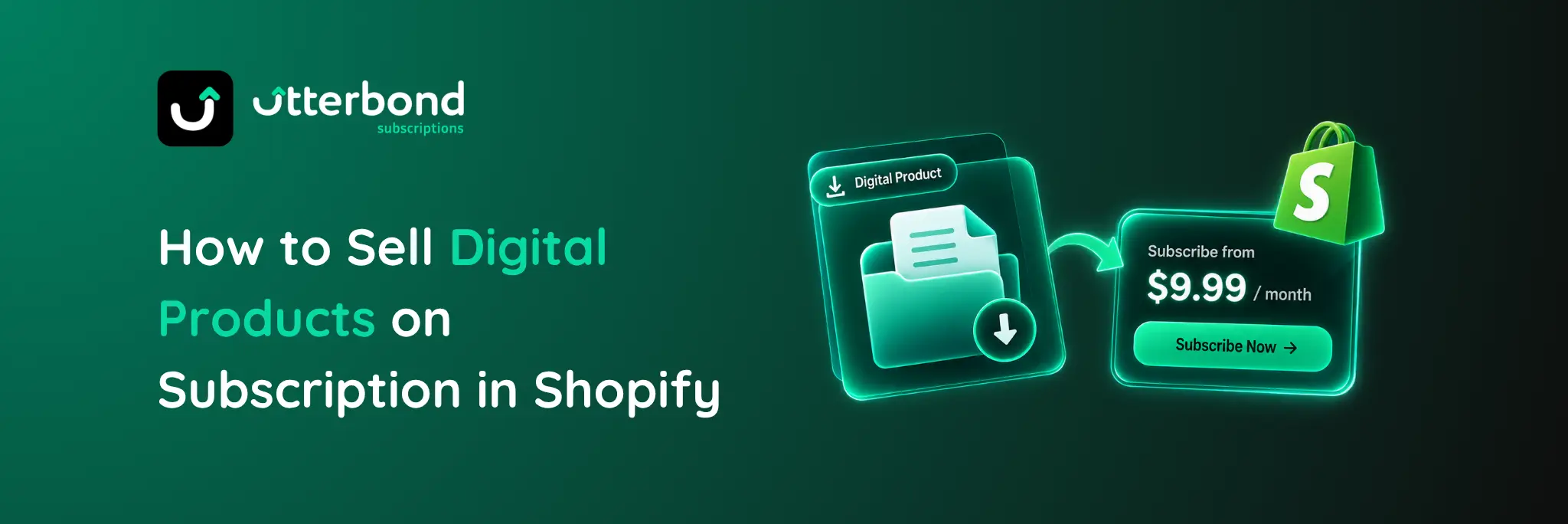
Boost Your
Shopify Store's Recurring Revenue With Utterbond!

You built the course. You designed the template pack. You recorded the training series. A customer buys it once, downloads the files, and vanishes into your order history. That sale is done. No warehouse, no shipping labels, no supply chain headaches - but also no second transactions from the same person.
Here's the truth that most Shopify merchants find uncomfortable: Digital products were built for subscription. It costs next to nothing to deliver an ebook, preset library, stock photo collection, or members-only video channel a second time. No packaging. No freight. No "out of stock" panic. Yet the majority of merchants still sell these assets as one-time transactions, leaving the most predictable, highest-margin revenue stream in ecommerce sitting untouched.
If you want to sell digital products on subscription in Shopify, the shift is not complicated. You don’t need to rebuild your store or hire a developer. You need two things that work in harmony: a billing engine that automatically collects recurring revenue, and a delivery system that protects your content without creating a support nightmare. This guide explains models that work, the pitfalls that silently kill digital subscription programs, and exactly how to set them up so that your margins are squeezed, not squeezed.
Why Digital Products Thrive as Subscriptions
Before you pick a model or install an app, you need to understand why digital subscriptions behave so differently from physical ones. The economics are not similar. They are fundamentally shifted in your favor.
The Margins Compound, Not Erode
A physical subscription box gets more expensive as it scales. Every refill ships in a box. Every box needs tape, filler, and a label. Month six costs you roughly the same as month one in fulfillment overhead. With digital products, month two costs you almost exactly what month zero cost: nothing. The file is already made. The video is already uploaded. The license key is already generated.
That means every renewal is close to pure margin. Your customer acquisition cost gets spread across twelve, eighteen, or twenty-four payments instead of one. The math is brutal in the best possible way.
Global Reach Without the Headaches
A subscriber in Tokyo and a subscriber in Toronto get the same instant experience the second their payment clears. There are no customs forms, no regional carrier gaps, no "delayed in transit" emails at 2 AM. Your content is borderless by default.
Inventory Anxiety Disappears
You cannot oversell a PDF. A stock photo library does not run out of units. A video course does not go on backorder. That removes an entire category of subscription stress the stockout, and lets you grow from ten subscribers to ten thousand without touching your operations.
Shopify gives you the storefront. Turning that storefront into a recurring revenue engine requires adding the layers Shopify does not include out of the box: smart Shopify recurring payments infrastructure and secure content delivery.
The Two Systems You Need to Get Right
A working digital subscription on Shopify is not one app. It is two systems that have to talk to each other.
Recurring Billing That Runs Itself
The first part is money. You need to charge customers on a schedule, let them manage their own plans, and collect payments when cards expire or the bank declines the charge. A robust Shopify subscription app handles plan types, billing frequencies, a self-service customer portal, and dunning logic that retries failed payments before they are canceled.
This is where subscription management becomes important. Your subscribers should be able to pause, cancel, or upgrade without having to email you. The less friction there is between them and their next billing cycle, the longer they will stick around.
Secure Delivery That Protects Your Margins
The second half is the experience side. You need to get the right files, videos, or access credentials to the right person every billing cycle. It needs to feel on-brand. And when someone cancels, their access needs to end cleanly.
Billing without secure delivery means you are charging for content you cannot reliably hand over. Delivery without billing means you are doing subscription work with none of the subscription revenue. Lock both halves down, and you have a real digital subscription business.
Digital Subscription Models That Actually Convert
“Sell digital products on subscription” sounds vague until you see the shape. Here are the models that most often appear and the models that actually retain subscribers.
Membership Libraries and Gated Content
Charge a recurring fee for ongoing access to a growing library. Templates, Lightroom presets, sample packs, stock photography, research reports, or design assets. The value proposition is access, not a single download. That difference is what keeps people subscribed.
This model works best when the library grows over time. A subscriber who joined in January should see new assets in March they did not have before. The freshness creates a habit. They log in, browse what is new, and remember why they pay you monthly.
Staged Course Releases
Instead of dumping an entire course on day one, drip it out. Week one gets the foundation module. Week three unlocks the advanced tactics. Week six delivers the capstone project.
This paces the learner. More importantly, it gives them a reason to stay subscribed through the full program. If someone binges everything in forty-eight hours, they have no reason to stick around. Staged releases turn a course into a journey, and journeys have higher lifetime value.
Digital Subscription Boxes
The "box of the month," minus the cardboard. A fresh drop of new presets every month. A design bundle that rotates quarterly. A members-only video released on the first of every month. It is the unboxing ritual that makes physical subscription boxes sticky, applied to content that costs nothing to ship.
The key is consistency and surprise. Subscribers should know something new is coming, but they should not know exactly what. That curiosity keeps them from canceling before the next drop.
Premium Video and Streaming Access
Fitness coaches, business mentors, and media creators are moving toward recurring video access rather than selling one-time downloads. Subscribers pay monthly for a library of workouts, coaching calls, or training sessions that are updated regularly.
Instead of emailing massive video files or relying on public links, merchants gate the content behind a login. The experience feels premium. The subscriber feels like a member, not a downloader.
Software Licenses and Renewals
Selling a plugin, app, or tool? A one-time license is a single transaction. A recurring license turns that same customer into an annuity. Pair your billing system with license key delivery, and the renewal happens automatically.
The critical detail: the license status must match the subscription status. If someone cancels, the key should expire or downgrade. If it does not, you are running a perpetual giveaway with extra steps.
Build a Subscription Business Around Your Content
Create recurring revenue from the digital products you already sell—with less manual work.
Start Free Utterbond →The Delivery Problem Most Merchants Ignore
Here is where most digital subscription programs quietly sink. It has nothing to do with billing.
When you sell a digital product once, a clunky download link is a minor annoyance. When you sell it on subscription, delivery is the product experience. It happens over and over. Every weak point gets multiplied by every billing cycle.
When the Experience Feels Cheap
A generic download link in a plain text email is a jarring finish to a premium monthly relationship. Your subscriber just paid you. They should land on a branded page with your logo, your colors, and clear next steps. Branded delivery pages, clean email templates, and a unified login experience make the recurring delivery feel like part of the product, not an afterthought.
Content Leakage and Piracy
Digital products cost nothing to copy. That is the upside. The downside? One subscriber can paste a download link into a group chat and quietly erode the reason anyone else pays you.
Protection features matter. PDF stamping embeds the buyer's details into the file. Download limits prevent a single account from becoming a public distribution hub. Timed access windows mean links expire. These are not paranoia tactics. They are margin protection.
Access That Never Expires
This is the mistake people forget to plan for. If a customer cancels their subscription but keeps downloading forever, you did not sell a subscription. You sold a lifetime license in twelve small payments. Gating delivery behind login so access can be controlled, revoked, and managed is what makes the model defensible.
Getting delivery right is not a bonus. It is the thing that makes the subscription business model actually work.
How to Set Up Digital Subscriptions on Shopify
You do not need an enterprise platform. You need the right stack and a clear sequence.
Step 1: Pick Products With Recurring Value
Not everything should be a subscription. Look at what you already sell that has ongoing or repeatable value. A template library you keep adding to. A course you could pace out. A monthly content drop you could commit to. Start with the products where continued access is genuinely worth paying for.
Step 2: Configure Recurring Billing
Install a Shopify subscription app that handles the money side: flexible plan types, billing frequency options, a self-service customer portal, and automated failed payment recovery. The best apps let you test the model on a free plan before you commit.
With Utterbond, you can set up Shopify recurring payments in minutes. Create weekly, monthly, or annual plans. Let subscribers pause, skip, or swap variants from their own dashboard. The less they need to contact you, the more they stick around.
Step 3: Set Up Secure Delivery
Pair your billing system with a digital delivery tool that handles files, videos, and gated access. The delivery app should integrate with your subscription billing so that access activates on payment and deactivates on cancellation.
If you are delivering courses, use scheduled releases. If you are running a membership library, gate the content behind login. If you are selling software, tie license key delivery directly to active subscription status.
Step 4: Make the Recurring Value Obvious
On the product page, sell the relationship, not the single file. "New assets every month." "Full library access, updated weekly." "Members-only videos, never sold separately." Subscribers renew when they can see what they would lose by leaving.
Use subscribe and save messaging to make the commitment feel smart, not risky. A small discount for annual billing, for example, locks in cash flow upfront and reduces monthly churn pressure.
Step 5: Protect the First Delivery, Then Every Delivery
The first cycle sets the expectation for the entire subscription. Make it clean, branded, and instant. Then keep it that way. Consistency is what quietly separates a subscription that compounds from one that churns.
Protecting Your Recurring Revenue
Once the revenue is recurring, two threats show up: churn and leakage. Your billing and delivery layers each defend a different flank.
Fighting Involuntary Churn
Involuntary churn expired cards, bank declines, and payment hiccups kills subscriptions that no one meant to cancel. A solid billing system uses smart retry logic, dunning emails, and card updaters to recover these payments automatically.
That is revenue you would otherwise lose silently, clawed back without you lifting a finger. Failed payment recovery is not a nice-to-have feature. It is a direct line to your bottom line.
Closing the Leakage Gap
On the delivery side, leakage is the threat unique to digital. Stamped files, download limits, timed access, and login gates mean a single subscription cannot quietly become a resource the whole internet uses for free.
You can also connect engagement tools like Klaviyo to keep subscribers active. An engaged subscriber is a retained subscriber. Send them a preview of next month's drop. Notify them when new content lands. Remind them what they would miss if they left.
Growing Your Digital Subscription Business
Getting the first subscriber is step one. Scaling the program is where the real work begins.
Use Subscription Bundles to Increase AOV
A subscriber paying for one digital product is good. A subscriber paying for three is better. Subscription bundles let you package related digital products together a course plus a template pack plus a monthly Q&A call at a price that feels like a deal but drives higher average order value.
Bundles also reduce churn. The more products a subscriber is tied to, the more they lose by canceling.
Let Customers Prepay for Better Cash Flow
Not every subscriber wants a monthly fee. Some prefer to pay quarterly or annually for a discount. Prepaid subscriptions improve your cash flow, reduce processing fees, and eliminate commitment. They also reduce your effective churn rate because the subscriber has already paid for the upcoming months.
Track What Matters With Subscription Analytics
You cannot grow what you do not measure. Subscription analytics should tell you more than total subscribers. You need churn rate by plan, revenue per subscriber, failed payment recovery rate, and upgrade patterns.
Use that data to test pricing, plan structures, and content release timing. If your monthly plan churns at 12% but your quarterly plan churns at 4%, you have a clear signal about where to steer new subscribers.
Build a Box Experience for Digital Goods
Even without physical inventory, you can borrow the psychology of build-a-box subscriptions. Let subscribers customize their monthly digital bundle. Choose three templates from a rotating selection. Pick the video topics they want next. That sense of control increases perceived value and reduces cancellation intent.
Ready to Turn Your Digital Products Into Recurring Revenue?
Your content is already built. Your audience already trusts you. The only missing piece is the infrastructure that turns one-time buyers into long-term subscribers.
Conclusion
Digital products are uniquely suited to subscription models. Margins are high, delivery is immediate, and inventory never runs out. Yet most Shopify merchants are still selling them one download at a time, leaving predictable revenue on the table.
The shift to recurring revenue isn’t a retrenchment. It’s an addition. You need two layers Shopify doesn’t give you out of the box: reliable recurring billing and secure, branded content delivery. Get billing right with the Shopify Subscription app, which handles plans, portals, and failed payment recovery. Get the delivery right with a system that protects your files and controls access based on subscription status.
When you sell digital products on subscription in Shopify the right way, the file you once sold becomes an ongoing customer relationship. The margins compound. The revenue becomes predictable. And the business you built around your expertise starts paying you like one.
Frequently Asked Questions
How do I sell digital products on subscription in Shopify without coding?
You do not need to write a single line of code. Install a Shopify subscription app like Utterbond to handle recurring billing, plan management, and the customer portal. Pair it with a digital delivery tool for files and gated content. The setup takes under an hour.
What is the best digital product to sell on subscription?
The best products have ongoing or repeatable value. Membership libraries, staged courses, monthly content drops, premium video access, and software licenses all work well. The key is that the subscriber should receive new or continued value every billing cycle.
Can I offer both one-time purchases and subscriptions for the same digital product?
Yes. Most merchants use a hybrid model. Offer the single purchase at full price and the subscription at a slight discount with added benefits like ongoing updates or exclusive content. This lets you capture both audiences without cannibalizing either.
How do I prevent subscribers from sharing my digital downloads?
Use a delivery system with login-gated access, download limits, and file stamping. When a subscriber cancels, their access should end automatically. That combination protects your content without creating a poor user experience for paying customers.
What happens when a subscriber's payment fails?
A good billing system uses failed payment recovery with smart retries and dunning emails. The subscription stays active during the retry window, and the subscriber gets clear instructions to update their card. Most failed payments are recoverable if the system handles them proactively.
Should I offer monthly or annual billing for digital subscriptions?
Offer both. Monthly billing lowers the barrier to entry. Annual billing improves cash flow and reduces churn. Many merchants use a subscribe and save discount on annual plans to steer subscribers toward longer commitments.
Boost Recurring Revenue with Shopify Subscriptions
Enhance your customers' lifetime value by introducing subscription options. Start now with the free Shopify Subscriptions app and build lasting relationships while securing a steady revenue stream.
Learn more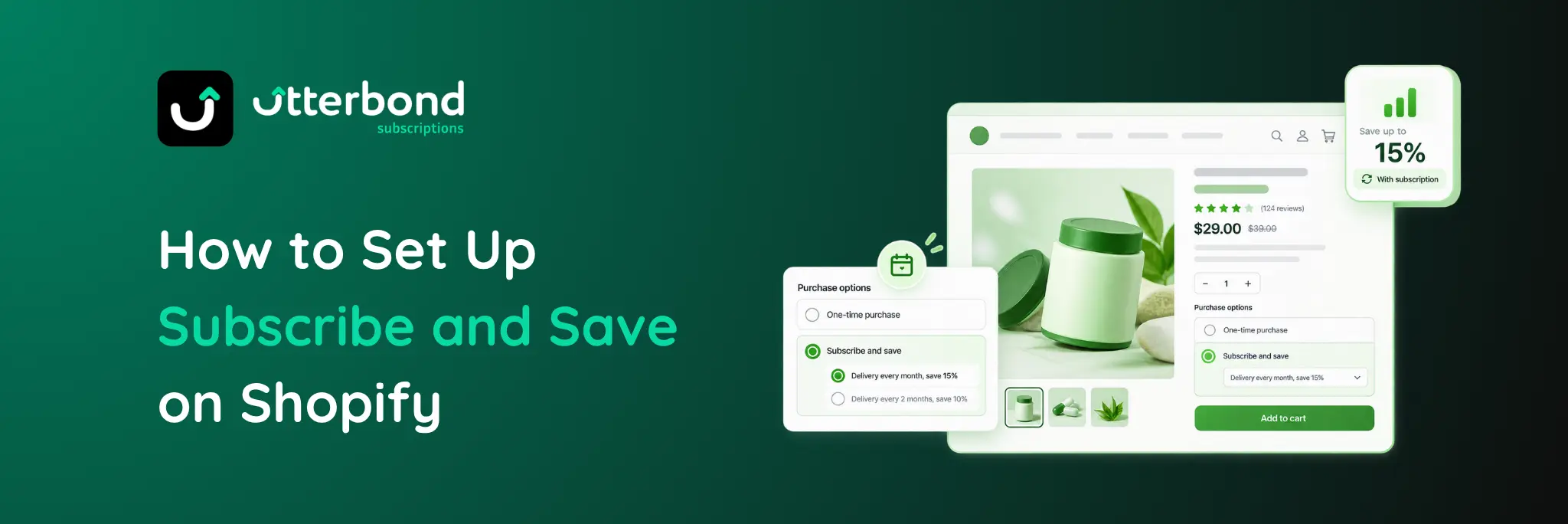
.svg)
.webp)